OCPI Bilateral Connections or One Hub? What Each Really Costs a CPO
By YoHub10 min read

💡 OCPI Bilateral Connections vs a Hub: Key Highlights
- The core OCPI 2.2.1 build costs the same either way. A hub saves the cost you pay again for every extra partner.
- A CPO reaching N eMSPs directly runs N connections, N handshakes and N version upgrades. Through a hub it runs one.
- In our worked model, 10 direct partners cost 64 engineer-weeks in year one against 6.4 for one hub connection. Every input is shown, so you can swap in your own.
- Settlement decides the finance savings. In India the hub settles, so you have one counterparty. Outside India the parties settle with each other and the hub reconciles.
- Most operators end up with a mesh: one or more hubs, plus a few direct links where the volume or the terms justify them.
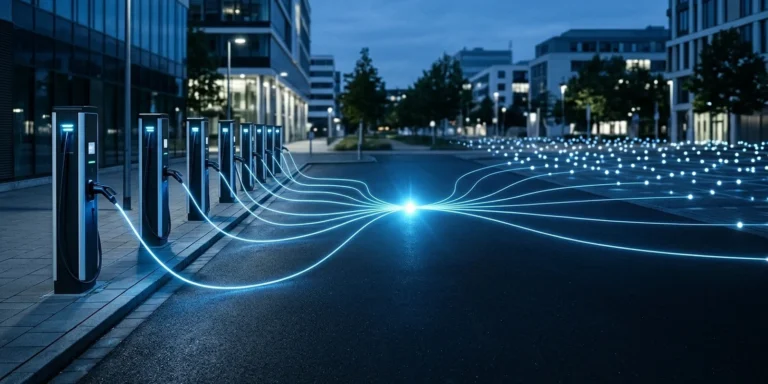
OCPI bilateral connections are the oldest way to roam. A charge point operator (CPO) and an e-mobility service provider (eMSP) exchange credentials, connect their OCPI endpoints and sign a roaming agreement. Do it twenty times and you have twenty integrations to test, twenty upgrade schedules to follow and twenty counterparties to reconcile every month.
This post is for CPO founders and CTOs. It costs out build, testing, upkeep and the commercial side, shows every assumption so you can use your own, and says where a hub saves money and where it doesn’t.
What one bilateral OCPI link involves
Separate two costs that often get lumped together. Your OCPI implementation (Locations, Sessions, CDRs, Tariffs, Tokens and Commands) is needed whether you connect to one partner, fifty or a hub. The per-partner work to bring each connection live and keep it running is what the bilateral-versus-hub decision is about.
For each bilateral partner, a CPO repeats roughly this:
| Per-partner task | What it involves |
|---|---|
| Credentials handshake | The receiving side issues token A out of band. The sender posts token B and gets token C back, then both store each other’s endpoints (OCPI 2.2.1 Credentials module). Repeated on token rotation and version changes. |
| Module mapping | Agree which modules and roles each side implements and how party IDs map to brands. |
| Integration testing | Push locations and tariffs, authorise a test token, run sessions to a CDR, check totals match. Repeated after major releases. |
| Go-live validation | Pilot sessions on real chargers, partner sign-off, cut-over. |
| Monitoring and incidents | Failed pushes, stale locations, missing CDRs, triaged with the partner’s support team. |
| Version upgrades | A PUT on the credentials endpoint switches versions; both sides re-fetch endpoints and retest. |
| Contract and finance | A roaming agreement, then reconciliation, invoicing and collection every period. |
Per-partner work on a bilateral OCPI 2.2.1 link. Your OCPI build itself is a one-off and is not in this list.
Calendar time matters as much as effort. Field reports quoted by the energy advisory firm innobu put partner validation, from first contact to a live connection, at up to six months (innobu, August 2026). The bottleneck is rarely the protocol; it is partner queues, test windows and sign-off.
OCPI bilateral connections vs a hub: the connection count
The arithmetic of OCPI bilateral connections is simple, and it gets bad quickly:
- One CPO, N eMSPs. Direct means N connections. A hub means one connection per hub.
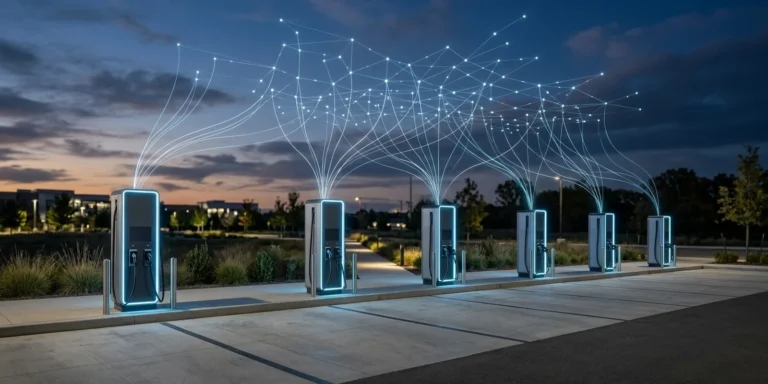
- A whole market of C CPOs and E eMSPs. If every CPO linked to every eMSP, the market would carry C × E links. Through one hub it carries C + E.
Take YoHub’s own network as the example: 70+ CPO networks and 40+ eMSPs across its regional hubs, as of October 2026. If every one of those CPOs had linked directly to every one of those eMSPs, that would be 70 × 40 = 2,800 bilateral links. Through the hub it is 70 + 40 = 110 connections, about 4% as many (Derived from the stated party counts). Not every CPO wants every eMSP, so the real gap is smaller, but direct links grow by multiplication and hub connections by addition.
The OCPI specification says the same. It added message routing in version 2.2 because peer-to-peer links get harder to maintain as connections grow, and hubs cut that number (OCPI 2.2.1, Transport and format). The hub routes on OCPI-to-party-id and OCPI-to-country-code headers, and the Hub Client Info module tells you which parties are connected.
Reach follows the same arithmetic: a CPO on a hub is visible to every eMSP already on it. From the eMSP side, YoHub makes 75,000+ charging stations reachable worldwide, 14,000+ of them in India.
What OCPI bilateral connections cost: a worked model
We found no independent per-partner price for an OCPI integration in any currency, so we don’t quote one. Instead, here is a model with its inputs in the open. The inputs are assumptions for a CPO with a working OCPI 2.2.1 implementation; replace them with your own. Every output is Derived from them.
| Input | Assumption | Why this order of magnitude |
|---|---|---|
| A. Onboarding per connection | 4 engineer-weeks | Handshake, module mapping, testing and go-live support for six functional modules |
| B. Upkeep per connection | 1 engineer-day a month | Token rotation, partner releases, incident triage |
| C. Reconciliation per counterparty | 2 hours a month | Match CDRs, kWh and amounts; raise disputes |
| D. Invoicing and collection per counterparty | 2 hours a month | Raise or check the invoice, chase payment |
Model inputs. These are illustrative assumptions, not measured figures. A 5-day engineer-week is used throughout.
Now apply those inputs to a CPO choosing between 10 or 30 direct eMSP partners and one hub connection:
| Cost line (year one) | 10 bilateral links | 30 bilateral links | One hub connection |
|---|---|---|---|
| Onboarding (A × connections) | 10 × 4 = 40 eng-weeks | 30 × 4 = 120 eng-weeks | 1 × 4 = 4 eng-weeks |
| Upkeep (B × connections × 12 ÷ 5) | 10 × 12 = 120 days = 24 eng-weeks | 30 × 12 = 360 days = 72 eng-weeks | 12 days = 2.4 eng-weeks |
| Engineering, year one | 64 eng-weeks | 192 eng-weeks | 6.4 eng-weeks |
| Engineering, each later year (upkeep only) | 24 eng-weeks | 72 eng-weeks | 2.4 eng-weeks |
| Finance hours a year ((C + D) × counterparties × 12) | 4 × 10 × 12 = 480 h | 4 × 30 × 12 = 1,440 h | Depends on the settlement model (next section) |
| Roaming agreements to negotiate | 10 | 30 | Depends on the settlement model |
Derived from inputs A–D. Engineering for the hub column covers the connection only; the core OCPI build is equal in every column and excluded.
To convert to money, multiply engineer-weeks by your fully loaded cost per engineer-week (R) and finance hours by your hourly cost (H). The hub adds one line the bilateral columns lack: its fee, F a year. With 10 partners, the hub pays for itself in year one when:
Two things the table leaves out also favour fewer connections. Calendar time: ten partners means ten validation queues, a hub one. And upgrades: OCPI 2.3.0 is current, 2.2.1 is still widely deployed, and 3.0 is targeted for mid-2027 (EVRoaming Foundation). Over bilateral links each partner sets its own timeline and you retest N times; through a hub you upgrade one connection when you choose.
The costs a hub does not remove
A hub makes the per-partner cost much smaller, but it doesn’t make it zero. Be clear about what stays:
Your OCPI implementation
You still run OCPI 2.2.1 yourself: correct Locations, honest EVSE status, accurate Tariffs and CDRs that reconcile. A hub relays bad data as faithfully as good. The OCPI 2.2.1 integration docs for developers list what a connection to YoHub expects.
Data quality and per-party logic
Through a hub, your Tokens and Locations can go out by broadcast push to every connected party in the opposite role. Sessions and CDRs can’t, because the specification keeps party-specific records, which may fall under privacy law, out of broadcast (OCPI 2.2.1). Each still has to be addressed to the right party ID.
The hub fee and the dependency
You pay the hub, and its uptime becomes part of yours. Ask for its pricing basis, its incident process and how you would leave. You still set your tariffs and choose your partners; the hub only removes the separate integrations.
Settlement changes the finance column: India vs outside India
The engineering saving is the same in every market. The finance saving depends on who settles, and YoHub runs two different models. For the full mechanics of a settled session, see how EV roaming settlement works.
India: OCPI 2.2.1 + UBC (Beckn), settled through the hub
In India, one connection carries OCPI 2.2.1 and Unified Bharat e-Charge (UBC, which runs on Beckn). YoHub invoices the eMSP, with GST, and pays the CPO. The CPO’s finance team therefore deals with one settlement counterparty, not one per eMSP. In the model above, finance work drops from 480 hours a year with 10 direct partners to (2 + 2) × 1 × 12 = 48 hours (Derived), and collection risk moves from N eMSPs to the hub. There is also no second integration for UBC. See EV roaming in India for the details.
Outside India: peer to peer, with reconciliation by the hub
Outside India, YoHub works peer to peer. The parties invoice and pay each other directly, and the hub reconciles kWh and amounts between them without holding funds. Commercial terms and invoices stay between the CPO and each eMSP, so invoicing (input D) still scales with partners. The hub takes over the matching work (input C). With 10 partners, finance work falls from 480 hours to 2 × 10 × 12 = 240 hours a year, and to 720 hours with 30 partners (Derived). The engineering saving is the same as in India.
| Year one, 10 eMSP partners | Bilateral | Hub, India model | Hub, outside-India model |
|---|---|---|---|
| Engineering | 64 eng-weeks | 6.4 eng-weeks | 6.4 eng-weeks |
| Finance | 480 h | 48 h | 240 h |
| Settlement counterparties | 10 | 1 (the hub) | 10 |
| Who holds funds | Each party | The hub | Each party; the hub never holds funds |
Derived from the model inputs. The two hub models are kept separate because they are separate products.
Why most CPOs end up with a mesh
Hub or direct is rarely an either-or choice. The EVRoaming Foundation notes that many organisations use OCPI in a hybrid way, with peer-to-peer connections alongside roaming hubs (EVRoaming Foundation). In practice a CPO’s roaming map tends to look like this:
- One or more hubs for the long tail of eMSPs, payment apps and fleet platforms.
- More than one hub where partners sit on different hubs or in different regions. YoHub itself runs six regional hubs and connects partner hubs, such as Eco-Movement on its MENA hub.
- A few direct links where one partner, such as a large fleet or an OEM app, carries enough volume or needs specific enough terms.
The model gives a rule: a direct link earns its place when the hub fee on that partner’s sessions exceeds A × R up front plus B × 12 × R a year (with our inputs, 4 engineer-weeks up front plus 2.4 a year). That holds for a handful of partners, rarely for the long tail.
A decision checklist for CPO founders and CTOs
- Count the eMSPs you want live in 12 months; split the volume few from the long tail.
- Replace inputs A–D with your numbers and work out the gap at that count.
- Compare each hub’s fee F with that gap.
- Check the settlement model in each market: who invoices, who collects, and who holds the funds.
- Check which OCPI versions your partners run and when they plan to move.
- Go direct only where a partner clears the rule above; route the rest through a hub.
If you run chargers and want to see what one connection reaches, the OCPI roaming page for CPOs covers how onboarding works.
Frequently Asked Questions
What is an OCPI bilateral connection?
A direct OCPI link between two parties, usually a CPO and an eMSP, with no hub in between. They exchange credentials, connect endpoints and sign their own roaming agreement, and each link needs its own testing and upkeep.
How many OCPI connections does a CPO need?
Direct, one per eMSP it wants to serve. Through a hub, one per hub. Many CPOs run one or two hubs plus a few direct links to high-volume partners.
Is a roaming hub cheaper than bilateral OCPI connections?
Usually, beyond a few partners. The core OCPI build costs the same either way, but onboarding and upkeep scale with each direct partner. In our worked model, 10 direct links cost 64 engineer-weeks in year one against 6.4 for one hub connection, before the hub’s fee.
Can a CPO connect to more than one roaming hub?
Yes. OCPI supports hub and peer-to-peer use side by side, and many operators connect to several hubs across regions while keeping a few direct links.
Does a roaming hub hold the CPO’s money?
It depends on the settlement model. In India, YoHub settles: it invoices the eMSP with GST and pays the CPO. Outside India, YoHub works peer to peer: the parties pay each other directly and the hub only reconciles, without holding funds.
Sources: OCPI 2.2.1, Transport and format (message routing) | OCPI 2.2.1 Credentials module | OCPI 2.2.1 Hub Client Info module | EVRoaming Foundation, OCPI | innobu, eRoaming consolidation (Aug 2026)